Moisture Barriers for Cutlery Packaging in High-Humidity Environments
2026-03-23
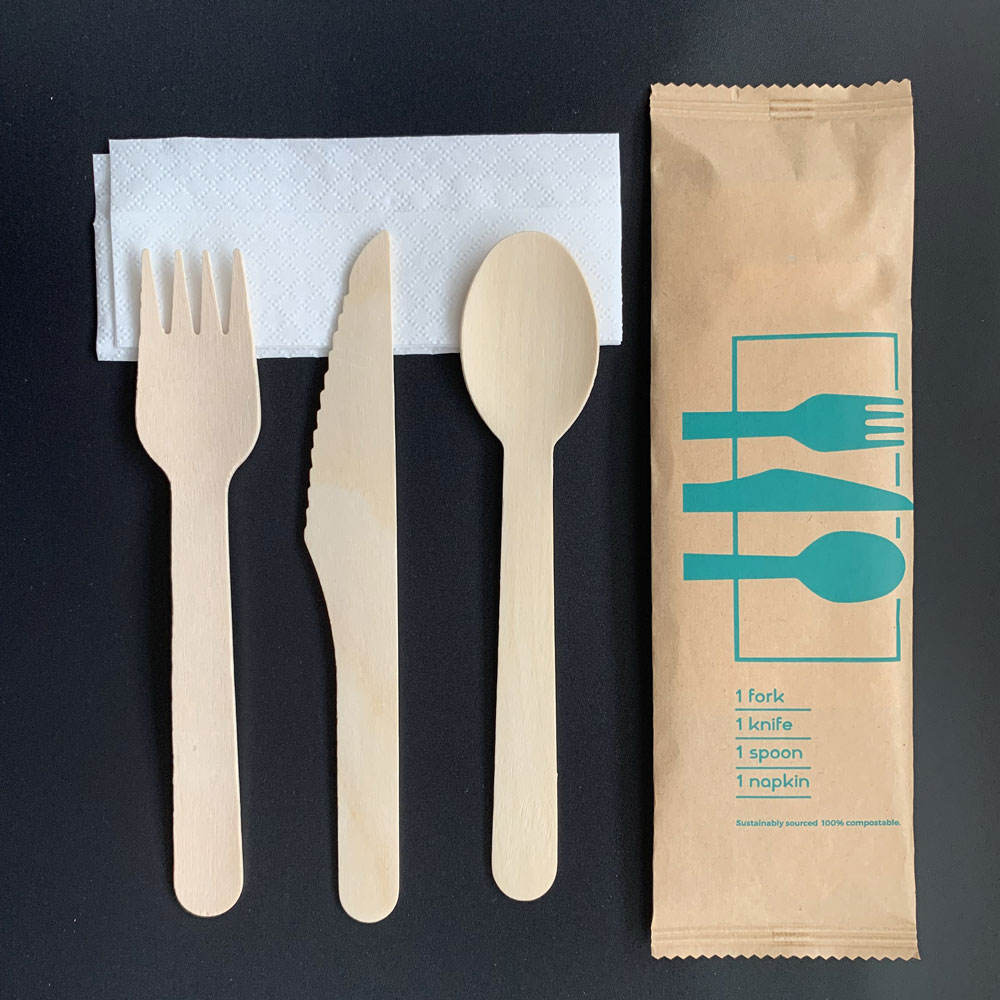
In large-scale scenarios such as catering chain support and centralized group meal supply, the moisture-proof performance of cutlery packaging directly determines product delivery quality and customer cooperation experience. Especially when the ambient relative humidity exceeds 85% for a long time, the napkins inside ordinary paper cutlery packaging will absorb moisture and soften within 48 hours, and even cause packaging deformation and adhesion, which is the core practical concern for bulk buyers. To effectively reduce the Moisture Vapor Transmission Rate (MVTR) while retaining environmental-friendly properties, new processes such as aqueous barrier coating and bio-based PLA coating have become the mainstream solutions for moisture barrier for disposable cutlery packaging.
For customers purchasing cutlery packaging in bulk, material selection needs to balance not only moisture-proof effect but also degradability, processing performance and comprehensive use cost. The adaptability of different barrier coating materials in commercial scenarios varies significantly, with specific parameter comparisons as follows:
| Coating Material | Biodegradability | Moisture Barrier | Heat Sealing | Cost Factor | Commercial Scene Adaptability |
|---|---|---|---|---|---|
| Traditional PE Coating | Low | Extremely High | Excellent | 1.0 | Large-scale conventional procurement |
| PLA Biodegradable Film | High (Industrial Composting Required) | High | Medium | 1.8 | Eco-oriented custom demands |
| Aqueous Barrier Coating | High (Direct Recyclable) | Medium-High | Excellent | 1.4 | Universal scenarios balancing eco & practicality |
Storage and transportation in high-humidity environments are key links in high-humidity protection for commercial cutlery packaging. The dew point temperature of storage spaces in coastal port cities stays above 26℃ all year round, and packaging materials will continuously absorb water vapor from the air, which may affect the use effect even in short-term storage. To avoid such problems, simply control the dew point of the storage environment below 22℃ with regular ventilation, which can greatly reduce the risk of packaging moisture regain. This is also the storage reference advice that Gorlando actively provides to cooperative customers in moisture-proof design for custom cutlery packaging.
Many buyers tend to add desiccant packets in packaging to solve moisture problems, but this method not only increases extra costs but also risks of desiccant leakage and cutlery contamination. When developing MVTR control solutions for cutlery packaging, Gorlando prefers to start from the packaging structure itself, balancing moisture resistance and ventilation in a way more suitable for commercial needs:
- Adopt controllable microporous breathable structure to discharge trace moisture inside the package and block external water vapor intrusion
- Strictly control the raw material moisture content within 0-5% to reduce moisture risks from the production source
- Match precise heat sealing process to eliminate edge gaps and enhance overall barrier effect
This desiccant-free design not only reduces the comprehensive use cost for customers, but also ensures the integrity of coating technology for biodegradable cutlery packaging, adapting to the needs of long-term bulk procurement.
FAQ
Q: How to keep napkins in cutlery packaging dry for a long time in large-scale catering delivery?A: Prioritize cutlery packaging made of aqueous barrier coating or PLA coating, combined with customized sealed heat sealing and microporous breathable design, which can continuously maintain internal dryness in high-humidity environments and meet the needs of long-distance delivery and bulk storage.Q: What MVTR standard is required for eco-friendly commercial cutlery packaging?A: In high-humidity environments, the MVTR of moisture barrier for disposable cutlery packaging is recommended to be controlled within 5g/(m²·24h), which can meet environmental requirements and stably resist erosion in humid environments.Q: From the perspective of brand eco-positioning, is aqueous coating more suitable for custom cutlery packaging than traditional PE coating?A: Aqueous coating can be directly recycled with outstanding degradation advantages, and its moisture-proof performance is sufficient for most commercial scenarios. It is a more suitable choice than PE coating for buyers focusing on environmental-friendly image.
Gorlando has focused on cutlery packaging customization for many years. According to the characteristics of high-humidity environments, we can provide exclusive barrier technology and structural design based on customers' procurement scale, usage scenarios and environmental protection needs. We control the whole process from material selection to production quality inspection, ensuring that each customized packaging maintains stable performance in complex environments and truly solves moisture-proof pain points in commercial scenarios.
Disposable Chopsticks In-depth Analysis of Carbonization Process: Quantitative Effects of Light, Medium and Deep Carbonization on Hardness and Anticorrosive Properties
How Switching from Plastic to Bagasse Food Containers Affects Profit Per Order?