Toothpicks Quality Grading for Hospitality: What Separates a Good Toothpick from a Bad One
2026-05-06
In the refined operation of catering and hospitality industries, toothpicks are easily overlooked supplies that affect the closed loop of customer experience. Many store operators purchase disposable toothpicks solely based on price, only to encounter common problems such as batch breakage, surface burrs, peculiar woody odors, and inconsistent color batches. These minor product flaws subtly reduce customers’ consumption satisfaction and even weaken the overall service texture of stores. Mastering professiona lhospitality-grade toothpicks quality grading standards is a key measure for catering and accommodation stores focusing on word-of-mouth to optimize service details and avoid negative experience reviews.
Industry "Toothpick Discrimination" and Hidden Actual Costs
Most people regard toothpick defects as trivial issues, but they are hidden risks that easily leave procurement managers to take the blame in store operation and procurement work. When customers encounter rough, broken or smelly toothpicks, they never blame the supplier, but directly judge that the store has poor hygiene control and careless service details.
The losses caused by such negative impressions are far higher than the procurement cost of a box of toothpicks. A single negative review on the platform will directly reduce the store’s comprehensive score by about 0.1. The chain reactions of reduced exposure, lower conversion rate and lost customer traffic brought by score fluctuations are hidden costs that cannot be reflected in the procurement budget.
Through serving multiple chain hotel clients and handling daily customer complaints, we have discovered a neglected industry truth. One of our national chain hotel clients frequently received complaints about bamboo toothpicks breaking off and leaving bamboo residues in drinks and plates. After reviewing large quantities of defective products, we confirmed that 98% of breakage and residue problems were not caused by insufficient raw material toughness, but by the lack of refined polishing and flattening treatment for bamboo joints by small and medium manufacturers. Saving a little production cost will eventually expose terminal stores to continuous complaints, negative reviews and damaged reputation. This is why Gorlando always adheres to fine processing procedures for every single toothpick.
In short, toothpick procurement is never a simple purchase of consumables, but a pre-control measure for store reputation risks.
1. Physical Safety Performance: The First Hard Threshold for Catering Toothpicks
Physical safety is the primary criterion for judging the quality of disposable catering toothpicks and the first hard threshold for ensuring customer safety during use. Few people notice that the tip craftsmanship, rod toughness and overall flatness of toothpicks have strict industry reference standards, instead of simple forming.
The polishing precision of the tip directly determines the user experience. High-quality toothpicks strictly control the tip diameter tolerance to avoid gum injury from overly sharp tips or poor usability from overly blunt ones, with all burrs and cracks completely removed through fine polishing. The flexural toughness of toothpicks is another core indicator. Qualified products will not break or chip under the conventional force of tooth picking and food piercing during dining. High-end star hotels have long included toothpick breakage rate and defect rate in supplier assessment systems to screen reliable and stable supply channels.
With self-owned raw material bases and standardized production lines, Gorlando selects high-quality natural moso bamboo aged 3-5 years with uniform density and sufficient toughness. The produced high-toughness catering toothpicks have a batch breakage rate far lower than the industry average, fundamentally eliminating potential safety hazards in use.
2. Usage Comfort: A Seamless Experience That Leaves Customers No Need to Check Their Palms
What widens the product gap is often the subtle usage details that customers can perceive but rarely mention. Low-quality toothpicks have rough and dry surfaces that irritate the oral mucosa. Some overly hard toothpicks may damage the gums and leave tiny bamboo scraps and burrs on the palms after use, ruining the whole dining experience. The core advantage of high-quality toothpicks is their ultra-smooth texture, delivering such a seamless feel that customers will not subconsciously check their palms after use.
The industry takes the surface roughness Ra value as a key reference. Premium catering-specific toothpicks strictly control the Ra value within an ultra-low range, with smooth surfaces free of particle feel. Natural bamboo has a warm and moderate texture, neither too hard to hurt gums nor too soft to bend and deform. Meanwhile, the standardized single-piece weight ensures a solid and steady grip, completely eliminating the flimsy feel of low-end supplies. These subtle texture differences gradually build a refined service reputation for stores over time.
3. Visual Consistency: Display Aesthetics Standards & Professional Inspection Methods for Premium Scenarios
For boutique restaurants and star-rated hotels that focus on environmental style, toothpicks are not only practical supplies but also tiny components of space display. Have you ever noticed that low-cost bulk toothpicks often have uneven lengths, inconsistent thicknesses and mottled colors? Placed on dining tables or in guest rooms randomly, they will directly reduce the overall exquisite sense of the space.
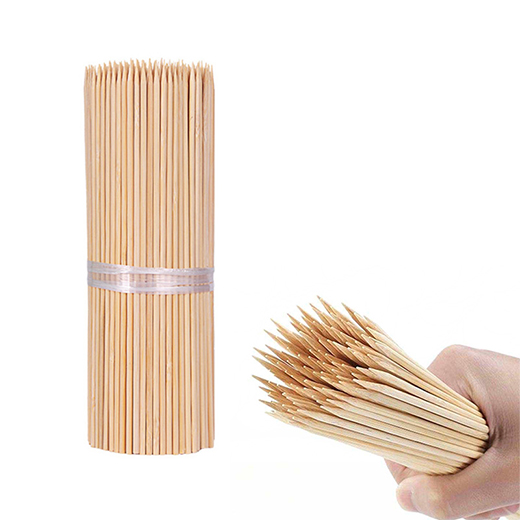
High-quality display-grade toothpicks for hotels strictly control the consistency of batch products. The length and diameter errors of products in the same batch are limited to a tiny range, with uniform and transparent color and no black spots, yellowing or miscellaneous flaws. The natural bamboo and wood tone perfectly fits various minimalist, light luxury and natural-style catering space designs, maintaining a neat and advanced texture for every table display.
Many procurement staff lack professional inspection experience and easily ignore batch color differences and subtle defects with rough visual checks. Here are the industry’s standard professional inspection rules and practical methods: Professional inspectors use a standard D65 light color assessment cabinet to compare batch colors and screen defects under fixed standard illumination, avoiding visual errors caused by ambient light. For purchasers without professional equipment, adopt this factory-level simple inspection method: Randomly select 100 finished toothpicks, lay them evenly on pure white paper, and observe horizontally at a distance of 1 meter. In the inspection standards of high-end catering and hotels, any toothpick with obvious color spots, black dots, local yellowing or uneven thickness can be directly judged as defective.
4. Hygiene and Packaging: Tailored for Different Business Scenarios
Hygiene safety is the core principle of catering supplies, and packaging craftsmanship determines the overall cleanliness of toothpicks from factory delivery to final use. Many stores ignore the importance of packaging, leading to toothpicks getting damp, dusty and moldy during storage and placement, causing unnecessary losses.
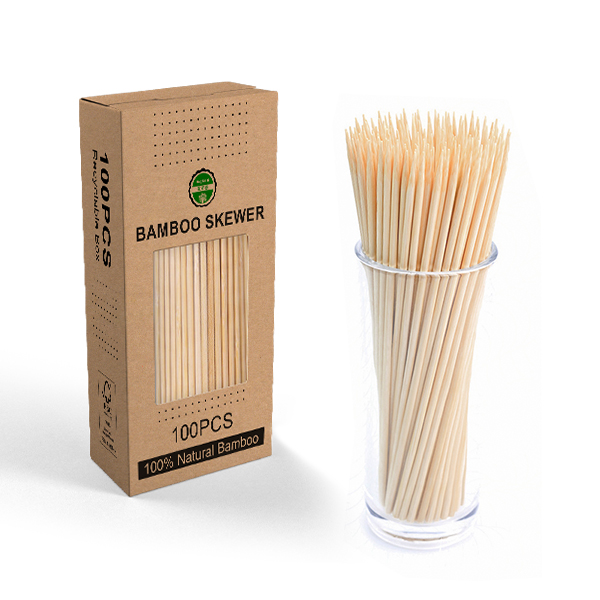
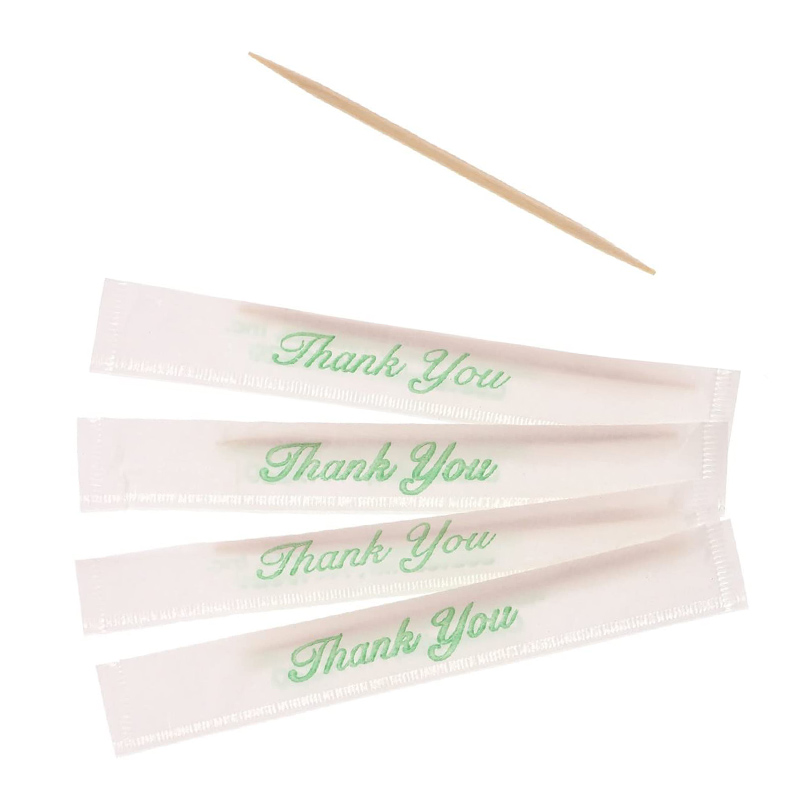
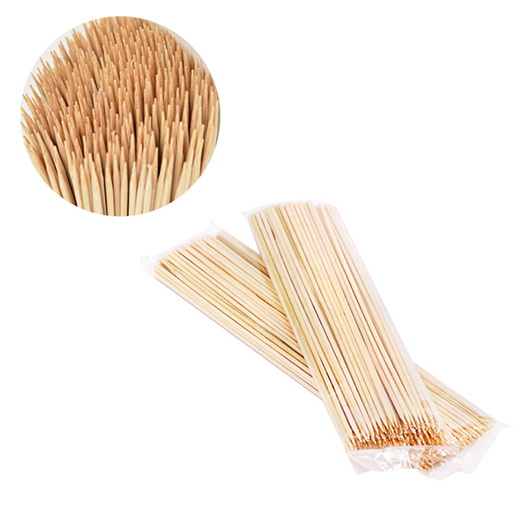
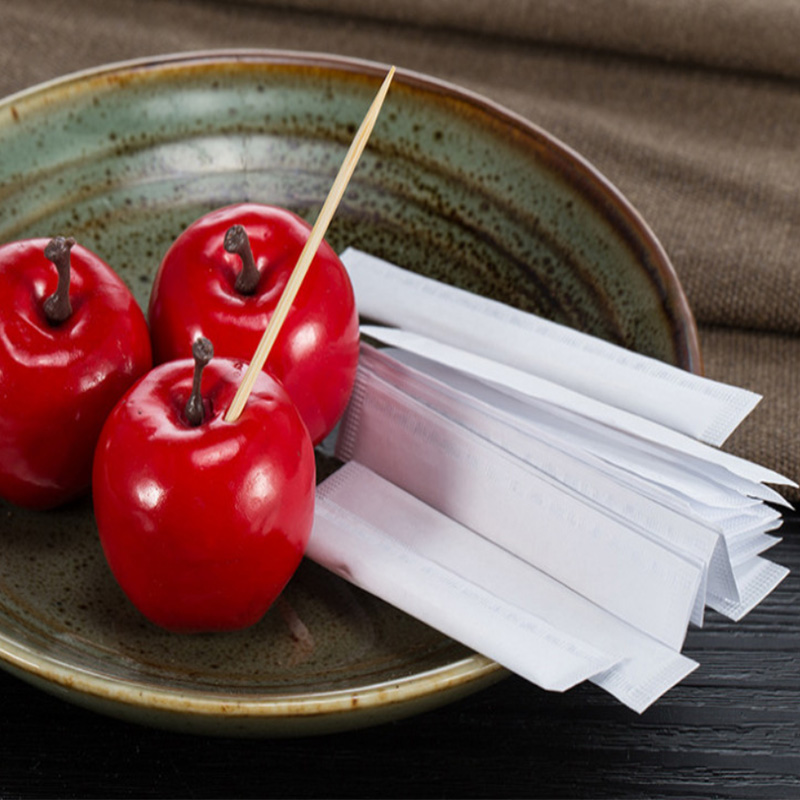
Different scenarios have completely different demands for toothpick packaging. Simply put, fast food requires quick access for fast table turnover, while hotels demand decent individually sealed packaging. At present, mainstream toothpick packaging is divided into bulk and individually sealed packages, adapting to different operation needs precisely. Bulk toothpicks feature convenient warehousing and quick access, suitable for high-frequency and high-consumption scenarios such as fast food and chain catering, with excellent moisture and dust resistance. Individually packaged toothpicks focus on high cleanliness and premium texture, with easy tearing, tight sealing, no glue residue and no package damage, ideal for star hotels, high-end banquets and boutique restaurants. Gorlando supports custom toothpick packaging services, enabling customized packaging patterns and specifications according to brand styles, balancing hygiene, practicality and brand display effects.
Core Toothpick Procurement Avoidance List
-
Avoid price-only procurement: Low-cost toothpicks usually adopt inferior materials and simplified craftsmanship with high defect rates, causing long-term loss of after-sales maintenance and brand reputation risks
-
Prioritize batch stability verification: Bulk procurement requires consistent color, size and toughness of products in the same batch to avoid messy store displays
-
Focus on warehousing adaptability: Choose moisture-proof and dust-proof packaging materials to adapt to long-term store storage and reduce damp waste
-
Verify food-grade safety qualifications: Formal catering toothpicks must have complete food contact safety certifications to avoid compliance risks
-
Prefer customizable services: Brand stores can strengthen brand recognition and improve service texture through exclusive packaging customization
2026 Updated Catering Toothpick Quality Grading Reference Table
|
Quality Grade
|
Core Process Parameters
|
Packaging Method
|
Applicable Scenarios
|
Core Advantages
|
|---|---|---|---|---|
|
Economy Grade
|
Breakage rate ≤1%, Surface Ra≤1.2μm, Size error ±0.3mm
|
Regular bulk bag packaging
|
Fast food restaurants, casual dining, canteens
|
Cost-effective, stable supply, meeting basic usage needs
|
|
Standard Grade
|
Breakage rate ≤0.6%, Surface Ra≤1.0μm, Size error ±0.25mm
|
Simple individual packaging / premium bulk packaging
|
Chain catering, budget hotels, casual restaurants
|
Smooth touch, low defect rate, balancing quality and practicality
|
|
Premium Grade
|
Breakage rate ≤0.3%, Surface Ra≤0.8μm, Size error ±0.2mm
|
Standard sealed individual packaging
|
Boutique restaurants, mid-range hotels, business clubs
|
Burr-free, odor-free, excellent toughness, uniform visual effect
|
|
Luxury Custom Grade
|
Breakage rate ≤0.1%, Surface Ra≤0.6μm, Size error ±0.1mm
|
Brand customized individual packaging / gift box packaging
|
Star-rated hotels, high-end banquets, private dinners, brand flagship stores
|
High-end full-process craftsmanship, customizable brand vision, ultimate user experience
|
Industry Practical FAQ (Exclusive Tips for Procurement & Inspection)
Q1: How to quickly screen unqualified toothpicks during inspection without professional equipment?
Master the industry’s practical formula: Rub, Bend, Smell for accurate inspection even for new buyers:
Rub on palm: Gently rub the tip and middle section of the toothpick on your palm. Any subtle dragging or rough feeling indicates residual burrs, and the whole batch can be rejected directly;
Bend at 30 degrees: Hold both ends of the toothpick and bend it gently to about 30 degrees. Qualified toothpicks show continuous bamboo fiber toughness without brittle fracture or layered cracking;
Smell after soaking: Soak several toothpicks in warm water for 5 seconds and smell them. Qualified products only have a faint natural bamboo flavor. Any sour, musty or chemical pungent odor means unqualified raw material or processing technology.
Q2: Is it necessary to distinguish toothpick quality grades for different business scenarios?
It is absolutely essential. Using low-grade toothpicks in high-end scenarios will weaken brand texture and cause hidden complaint risks, while blindly choosing high-end customized products for casual catering will lead to unnecessary cost waste. Matching eco-friendly degradable toothpicks of corresponding grades according to store positioning is the optimal procurement solution that balances reputation and cost control.
Q3: What is the biggest pitfall in bulk toothpick procurement?
Most procurement failures fall into three categories: unstable batch quality, damp deterioration during storage, and excessive hidden defects. Many manufacturers provide high-quality samples but cut corners in mass production, resulting in excessive color difference, soaring breakage rate and residual burrs. Choosing professional manufacturers like Gorlando with self-owned raw material bases, full-process independent production and real-time quality control completely avoids uneven batch quality problems.
Q4: What is the production cycle and adaptability of custom packaged toothpicks?
Gorlando supports customized toothpick packaging of all specifications and styles, perfectly adapting to different brand visual systems and store styles with efficient and stable delivery for regular custom orders. All customized products follow unified and strict quality inspection standards, ensuring consistent batch quality while realizing personalized customization.
Ultimately, toothpick quality selection is never about pursuing high-end configuration blindly, but about accurate matching and long-term stability. A tiny toothpick embodies the refined service concept of a store. Abandoning the low-price competition procurement mindset and selecting products based on standardized quality grading systems can not only control operating costs effectively but also continuously optimize customer experience, making every subtle detail empower brand reputation.
Core Data & Standard References
Safety requirements for food-contact bamboo and wood products: GB 4806.12-2022 (National Standard of China)
Surface roughness parameter reference: GB/T 1031-2009 General Rules
Industry breakage rate and physical defect standards: Derived from Gorlando’s internal quality inspection system, built based on ISO 2859-1 Sampling Inspection Procedures for Attributes
FDA relevant principles: Refer to the general provisions of 21 CFR on the physical safety of food contact materials
Note: The grading standards in this article are enterprise standards formulated by Gorlando based on the above regulatory frameworks, 20 years of manufacturing experience and actual customer demands. Some indicators are higher than general national standards, aiming to provide refined decision-making references for purchasers with different brand positioning.
Bamboo vs Wood Chopsticks: 2026 Sustainable Purchasing Decision Framework
Custom Toothpicks: New Ultrasonic Sealing Paper Packaging Higher Hygiene Level Than Traditional Glue Sealing