Disposable Chopsticks Procurement Pitfall Avoidance Guide (2026 Edition)|A Must-Read for Restaurant Owners, Complete Custom Tableware Selection Strategy
2026-04-15
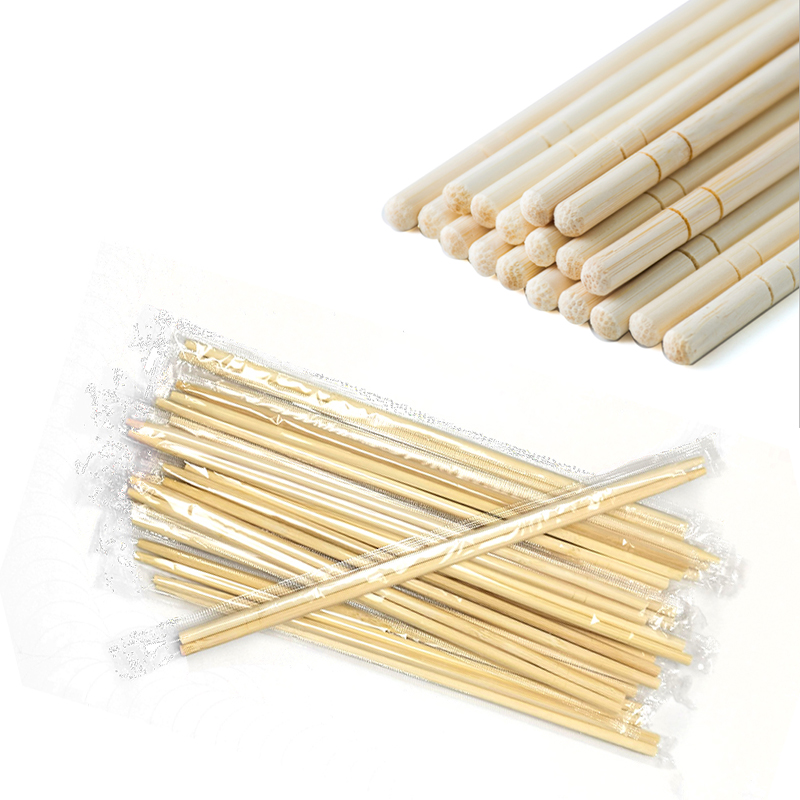
For operators of restaurant chains and specialty stores, disposable chopsticks are an indispensable necessity in daily consumables. This seemingly insignificant consumable directly determines dining experience, compliance risks and long-term procurement costs. With the continuous tightening of tableware industry standards in 2026, many businesses have fallen into the trap of low-quality cheap chopsticks, facing constant customer complaints or unqualified compliance inspections, which ultimately outweighs the gains. Starting from actual business scenarios, this article breaks down the core pitfalls of disposable chopsticks procurement, combined with scenario-based selection and supplier verification rules, helping you choose compliant, practical and business-adapted food-grade disposable chopsticks.
Many friends deeply engaged in the catering industry have complained that they are confused by superficial advantages when purchasing disposable chopsticks, ignoring hidden dangers in details. The three most common pitfalls are encountered by almost every store.Fixating on unit price while ignoring weight is the most common misunderstanding. Low-priced disposable bamboo chopsticks on the market seem cost-effective, but the weight per chopstick fails to meet standards. They are light in hand, easy to bend and break when picking up food, and easy to scatter during takeout delivery, which increases the cost of reissues and complaint rates. Qualified disposable chopsticks strictly control raw material density, using bamboo aged more than 3 years, with hardness and toughness meeting daily use needs.Only focusing on appearance and skipping test reports is equivalent to burying compliance hidden dangers for stores. In 2026, food-contact tableware implements the latest standard GB 4806.12-2022. Products without formal third-party test reports may have sulfur fumigation and heavy metal exceeding standards even if they look white and smooth. Once inspected, stores will face risks of suspension and rectification.Being satisfied with samples but not checking bulk goods is a serious problem in supply chain cooperation. Samples are carefully polished without burrs, but bulk disposable carbonized chopsticks have burrs, cracks and uneven color. Suppliers prevaricate with batch differences, and ultimately businesses have to bear the loss themselves.
Different business scenarios have vastly different needs for disposable chopsticks. Choosing the right chopstick type can not only improve dining experience, but also optimize packaging and distribution costs. This scenario-based selection table can be used directly for comparison:
| Catering Type | Recommended Chopstick Type | Core Parameters | Key Pitfall Avoidance Reminders |
|---|---|---|---|
| Takeout/Fast Food Chains | Short Integrated Disposable Chopsticks (18-20cm) | Lightweight, easy to store, stable integrated structure | Check the toughness of the integrated connection to avoid easy breaking and falling off |
| Hot Pot/Spicy Hot Pot Stores | Long Round Chopsticks (21-23cm) | High temperature resistance, full and non-slip grip | Must pass 100℃ high temperature deformation test, refuse bending when heated |
| High-end Chinese/Japanese Restaurants | Carbonized Square/Round Chopsticks | Burr-free, uniform color, warm hand feel | Carbonization process ≠ sulfur fumigation, confirm no chemical bleaching residue |
| Barbecue/Street Food Stalls | Thickened Round Chopsticks (diameter ≥5.5mm) | High hardness, sufficient length, labor-saving for turning skewers | Fine polishing of tips, eliminate the risk of wood thorns pricking the mouth |
| Group Meal/Feast Distribution | Individually Packaged Disposable Chopsticks | Sealed and mildew-proof, clear marking, uniform specification | Qualified packaging sealing, suitable for long-term storage and distribution |
A detail easily overlooked in takeout scenarios is that the length of disposable chopsticks must perfectly match food containers and takeout bags. Too long to seal, too short for customers to pick up food at the bottom, small details directly affect user ratings.
Choosing a reliable supplier is far more important than struggling with unit price. This implementable verification list covers basic qualifications, production strength and risk early warning, which can be checked one by one before cooperation:
Basic Supplier Access Thresholds (Indispensable)
- Valid business license with business scope including production and sales of disposable tableware
- GB 4806.12-2022 third-party CMA/CNAS test report, verify report date, sample name and batch information
- Food-related product production license, complete factory inspection process
Bonus Items for High-Quality Suppliers
- FSC Forest Certification, traceable raw material sources, in line with sustainable production requirements
- ISO 22000 Food Safety Management System Certification, standardized production process
- BRC Food Safety Certification, production environment and quality control meet international standards
Core Verification Points for On-site Factory Inspection
- Constant temperature and humidity in raw material warehouse to prevent mildew and deterioration of bamboo
- No pungent odor in carbonization workshop, eliminate sulfur fumigation process
- Fully automatic fine polishing process to ensure no burrs on each chopstick
- Retain microbial test records for each batch of products, support batch traceability
Cooperation Red Card Warning Items
Terminate communication immediately if pungent chemical odor appears in the workshop; cooperate cautiously if batch traceability and complete testing data cannot be provided; reserve the right to pursue liability and return goods if the quality difference between bulk goods and samples exceeds 10%.
The most common questions of restaurant owners in the long-term procurement of disposable chopsticks are organized into practical FAQs for direct reference:Q1: How to choose between disposable carbonized chopsticks and natural color chopsticks for long-term procurement?A: Disposable carbonized chopsticks achieve anti-corrosion and mildew resistance through high-temperature sugar and fat removal, no chemical additives, natural yellowish color, suitable for most catering scenarios; natural color chopsticks are white in appearance, if there is a pungent odor, they are most likely bleached with sulfur, and carbonized chopsticks are preferred for safety.
Q2: How to store bulk-purchased disposable chopsticks for a long time to avoid mildew and deterioration?A: Keep the storage environment ventilated and dry, control humidity below 60%, follow the first-in first-out principle, do not unpack individually packaged products for storage. The shelf life of qualified products is 18-24 months, and expired products cannot be used even if there is no mildew.
Q3: What production details should be noted for custom disposable chopsticks with printed logos?A: Confirm that the printing ink is food-grade, the logo printing position does not affect grip, check the proofing effect before mass production, and require suppliers to provide bulk printing random inspection reports to ensure clear patterns without falling off.
Q4: With a lot of information on the test report, what are the core contents that must be verified?A: Focus on verifying the testing institution's qualifications, report validity period (valid within 1 year), and the sample name is completely consistent with the purchased products. The authenticity can be verified by entering the number on the institution's official website, refusing to use copied or expired reports.
Q5: How to ensure the quality stability of long-term supply when purchasing disposable chopsticks in large quantities?A: Sign a contract to clarify that the bulk goods are consistent with the samples, agree on the batch random inspection standards, and select manufacturers with large-scale production and stable stocking capacity. For example, Gorlando focuses on custom disposable tableware, providing full-specification customization of disposable chopsticks, synchronous batch test reports, and long-term stable supply services, suitable for bulk procurement needs of various catering stores.
Procuring disposable chopsticks is never a simple price comparison behavior, but a key decision related to store compliance, reputation and cost control. With the increasing quality control requirements of the tableware industry in 2026, choosing compliant, high-quality and adaptable food-grade disposable chopsticks can not only avoid business risks, but also improve customers' dining experience. If you need a customized and high-quality disposable chopsticks procurement plan, you can directly contact Gorlando. Relying on professional customization capabilities and a complete quality control system, we provide stable and reliable tableware solutions for your catering business.
Why Unpackaged Toothpicks Continue to Gain Popularity in Eco-Friendly Supermarkets and Green Procurement Scenarios
How to Choose Hotel Toothpicks? Complete Guide from Budget to Five-Star, Avoid Costly Mistakes in Procurement