How Switching from Plastic to Bagasse Food Containers Affects Profit Per Order?
2026-03-19
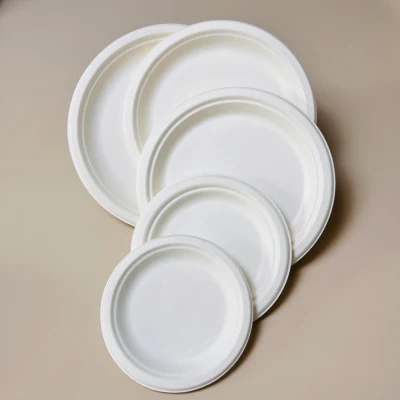
Bagasse Food Containers are no longer a "new thing" in the takeaway industry. After the full implementation of the plastic ban, they have gradually become a must-have for takeaway businesses. But many shop owners first think of "higher costs and squeezed profits" when hearing about switching from traditional plastic containers to bagasse food containers. To be honest, this worry is realistic, but in the takeaway business, profit is never just a simple addition or subtraction of purchase prices. The hidden costs of policy compliance, changes in repurchase brought by user experience, and preferential platform traffic support are the details behind the scenes that truly determine the final revenue of each takeaway order. Today, putting aside empty environmental feelings, we only stand from the perspective of business operation and calculate a real account to see whether switching to eco-friendly bagasse food containers increases the burden or quietly paves the way for store profitability.
The core demand for takeaway packaging is "safety, practicality and low cost". Taking the 1000ml container most commonly used in the takeaway industry as the core reference, combined with daily operation scenarios, we make a detailed comparison of the core operation dimensions between traditional PP plastic containers and disposable bagasse food containers. The cost difference, user experience and potential value are clear at a glance:
|
Comparison Dimension
|
Traditional Plastic Containers
|
Bagasse Food Containers
|
|
Procurement Cost
|
Conventional bulk procurement with small price fluctuations, but no brand added value
|
Controllable cost through large-scale procurement. If choosing custom bagasse food containers, the unit price can be further optimized after bulk customization, balancing practicality and brand display
|
|
Usage Loss
|
Easy to soften and deform when exposed to high temperature, with a high leakage rate when holding soups or oily meals, which is likely to cause after-sales disputes and indirectly increase loss costs
|
Made of natural sugarcane fiber and pressed under high pressure, it can withstand temperatures up to 120℃, is leak-proof and deformation-proof, and is stable for holding hot soups and stir-fries. The loss rate is more than 30% lower than that of plastic containers
|
|
Compliance Risk
|
The use of non-degradable plastic containers has been clearly restricted in some regions. Illegal use may face fines, suspension of business for rectification and other penalties, with hidden compliance costs
|
Fully biodegradable, in line with national environmental policies and local plastic ban requirements, without any compliance concerns, saving potential costs of illegal penalties
|
|
User Experience
|
Thin texture, easy to get oily, easy to have plastic odor when opened, which is likely to cause negative reviews of "cheap packaging" and affect user repurchase intention
|
Thick texture, no odor, in line with environmental protection concepts, can improve user dining experience, especially favored by young consumer groups, and can reduce packaging-related negative reviews
|
|
Storage Conditions
|
Need to avoid high temperature and exposure to the sun, otherwise it is easy to age and become brittle, with high storage requirements
|
Moisture-proof and shatter-proof, with loose storage conditions, no special storage required, which can reduce losses during storage
|
|
Long-term Value
|
Only can meet basic packaging needs, no brand bonus, and may even affect brand reputation due to "non-environmental protection"
|
Brand logos and slogans can be printed through custom bagasse food containers, accumulating environmental reputation, driving brand favorability, and helping long-term profitability
|
The reason why many merchants think switching to bagasse food containers is not cost-effective is that they only focus on the explicit expenditure of packaging, but ignore the profit compensation brought by hidden benefits. In fact, in actual operation, these hidden benefits can often offset or even exceed the price difference of procurement. For example, most takeaway platforms will add an "Eco-friendly Preferred" logo to stores using eco-friendly packaging, and the exposure is significantly higher than that of ordinary stores. The increase in exposure directly drives the steady growth of order volume. In addition, bagasse food containers reduce the problems of leakage and deformation, which can directly lower the packaging-related negative review rate. For every 1% increase in the positive review rate, the repurchase rate can be increased by 0.8% accordingly. These seemingly small changes, accumulated over time, contribute significantly to the store's gross profit.
In addition, consumers' recognition of eco-friendly packaging is increasing year by year. Especially young customer groups who pay attention to the quality of life are more willing to place orders in stores using eco-friendly bagasse food containers, and even willing to pay a small premium for eco-friendly packaging. Moreover, with the continuous tightening of environmental policies, the procurement cost of non-degradable plastic containers is also slowly rising, while the cost of bagasse food containers is gradually decreasing due to large-scale production, and the gap between the two will become smaller and smaller.
Combined with the experience of receiving merchants daily, we have sorted out several common questions when switching to bagasse food containers, with practical answers to help everyone avoid operational misunderstandings:
Frequently Asked Questions (Practical Answers) for Merchants
-
Q: Can bagasse food containers hold hot soups and oily meals stored for a long time? Will they leak oil or soften? A: Absolutely. Made of food-grade sugarcane fiber and specially treated for water and oil resistance, bagasse food containers are not only heat-resistant, but also can effectively block oil and soup. Even if they store hot soups and oily meals for a long time, they will not leak oil or soften, so there is no need to worry about damage affecting the user experience.
-
Q: Does custom bagasse food containers require a lot of investment? Can small and medium-sized merchants afford it? A: There is no need to worry too much. Gorlando focuses on the custom production of disposable bagasse food containers, and has launched a flexible customization plan for small and medium-sized merchants. The specifications, thickness and printed patterns of the containers can be adjusted according to needs, with a low minimum order quantity. The unit price is controllable after bulk customization, which can not only realize brand display, but also not increase too much cost, and small and medium-sized merchants can easily afford it.
-
Q: In addition to compliance, what are the practical benefits of using bagasse food containers for a long time? A: In addition to avoiding compliance risks, using bagasse food containers for a long time can also accumulate the environmental reputation of the brand and improve user stickiness. At the same time, it can reduce packaging-related after-sales disputes and save the time cost of manual after-sales processing. In addition, some platforms provide traffic support to eco-friendly merchants, indirectly reducing promotion costs. These benefits will gradually be converted into actual profits.
-
Q: Will the degradability ofbagasse food containers affect their service life? What special precautions are needed during storage? A: It will not affect the service life. The degradation of bagasse food containers requires specific temperature and humidity conditions. In daily storage and use, as long as it is kept dry and avoid moisture, the service life can fully meet the needs of takeaway packaging. During storage, it only needs to be placed in a dry and ventilated place to avoid dampness from long-term stacking, and no special treatment is required.
Here are 3 practical tips for switching to bagasse food containers to help you further control costs and improve revenue:
-
Choose the appropriate specification of bagasse food containers according to the type of food. For example, choose sealed lidded models for soups and lightweight models for simple meals to avoid cost waste caused by improper specifications;
-
Choose a professional custom manufacturer (such as Gorlando). Bulk customization can enjoy a more preferential unit price, and brand information can be printed at the same time to improve brand recognition;
-
Properly mention the use of eco-friendly bagasse food containers in the store details page and food notes, convey the concept of environmental protection, attract customers who pay attention to environmental protection, and improve the repurchase rate.
After calculating this complete business account, it will be found that bagasse food containers are never a "cost burden" in takeaway operation, but a long-term investment to help brand upgrading and stable profitability. Instead of struggling with the small price difference of a single purchase, understanding the comprehensive value brought by compliance, word-of-mouth and traffic is the core for takeaway merchants to control profits. Gorlando has a deep foothold in the field of disposable eco-friendly tableware. With professional custom bagasse food containers technology and flexible supply solutions, it provides cost-effective disposable bagasse food containers solutions for various takeaway merchants, helping everyone balance cost and experience, making eco-friendly packaging a real boost to store profitability, and achieving steady profit growth in compliant operation.
Moisture Barriers for Cutlery Packaging in High-Humidity Environments
Bamboo Cutlery: Why Airlines Are Choosing Ultra-Light Bamboo Cutlery for In-Flight Use?