Bamboo Toothpick: Why Smoothness Matters – The Science Behind High-Density Manufacturing
2026-01-21
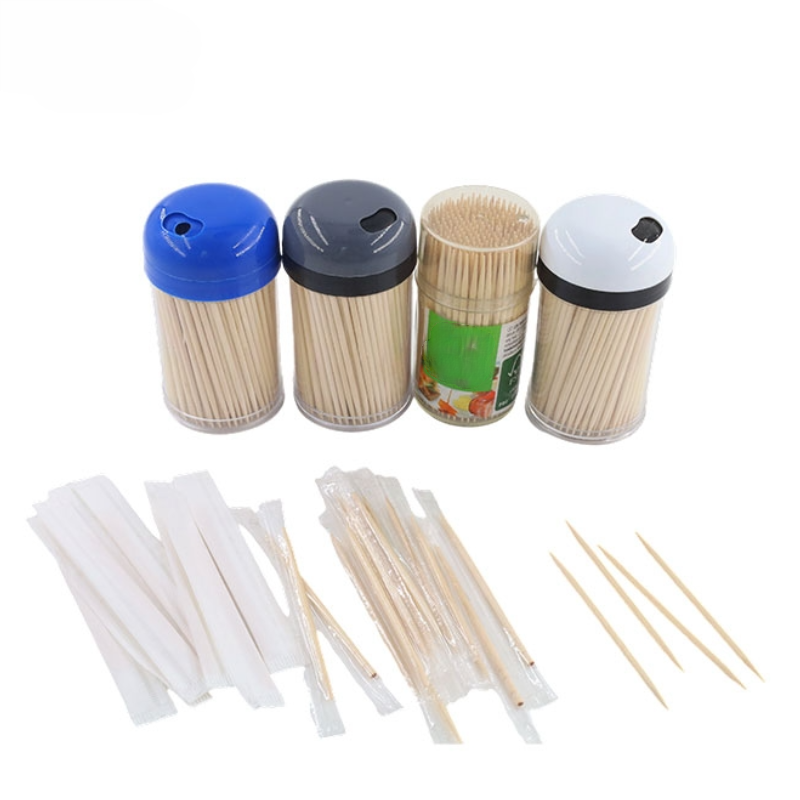
Dining out or enjoying a meal at home, few things ruin the post-meal mood like a Bamboo Toothpick with sharp burrs. A quick pick at your teeth, and a sudden stabbing pain on the gums makes you frown instantly. This humble little item’s smoothness is directly linked to user safety and brand trust. For consumers, it is the basic guarantee of oral comfort; for businesses, a sleek and burr-free high-quality smooth Bamboo Toothpick is a silent testament to attention to detail, quietly retaining repeat customers. As of 2026, more catering establishments are paying attention to such details, realizing that even the choice of small tableware can affect customer loyalty.
Burrs on a Bamboo Toothpick are no trivial matter – they hide potential risks. The oral mucosa is one of the most delicate tissues in the human body, and even microscopic burrs can scratch it, causing discomfort, inflammation and even minor infections. A 2025 industry survey found that 35% of complaints about catering supplies are related to defective disposable tableware, with Bamboo Toothpick burrs accounting for 27% of these complaints. Imagine a regular customer choosing your restaurant for its food, only to swear it off because a poorly made Bamboo Toothpick ruined their experience – no brand can afford such a risk.
The key to a smooth and durable Bamboo Toothpick lies in its raw material: high-density bamboo. The quality difference between mature bamboo and young bamboo directly determines the user experience and safety of the toothpick, with the core parameter comparison as follows:
Mature Bamboo vs Young Bamboo - Core Quality Comparison Table
| Comparison Dimension | Mature Bamboo (5+ years) | Young Bamboo (1-2 years) | Core Impact on Bamboo Toothpick |
|---|---|---|---|
| Fiber Density | Extremely high, sufficient nutrient accumulation | Sparse, with more impurities | Balanced hardness and toughness, not easy to break or bend during use |
| Shore Hardness | 78-83H | 56-64H | Supports cleaning power, no deformation when touching between teeth |
| Surface Texture | Fine fibers, easy to polish | Coarse fibers, burrs easy to remain | Easy to make smooth and burr-free finished products, greatly reducing the risk of oral scratches |
| Environmental Attribute | Reasonable growth cycle, raw material utilization rate over 90% | Resource waste, poor product stability | Meets sustainable production needs, reducing factory production loss by 60% |
Actually, mature bamboo harvested after more than 5 years of growth is the ideal raw material for making high-density durable Bamboo Toothpick. It will not bend or break easily during use, and its natural fiber structure avoids the brittleness of young bamboo. Choosing mature bamboo is not only for quality, but also for respecting the growth cycle of raw materials to produce more reliable products.
Smoothness does not happen by accident – it comes from a rigorous polishing process. Our factory adopts a three-stage drum polishing technology that takes more than 7 hours to complete. First, the cut Bamboo Toothpick blanks are placed in coarse sand drums to remove surface impurities and rough edges; then transferred to fine sand drums for precision grinding to smooth out even the tiniest protrusions; finally, polished in food-grade beeswax drums to add a soft and safe luster and completely eliminate residual friction points. The drums rotate at a gentle speed of 32 revolutions per minute, ensuring that every product is uniformly treated from tip to base, fully complying with the mandatory requirement of "smooth surface with no obvious burrs" in the national standard GB/T 39089-2020 for bamboo toothpicks.
Sterilization is a non-negotiable step for oral contact products such as Bamboo Toothpick. The effects of different sterilization methods vary greatly, directly affecting the safety and user experience of the product. The specific effect comparison is as follows:
Bamboo Toothpick - Mainstream Sterilization Method Effect Comparison Table
| Sterilization Method | Sterilization Efficiency | Residue Risk | Application Scenario | Adapted Bamboo Toothpick Grade |
|---|---|---|---|---|
| 125℃ High-Temperature Sterilization | ≥99.95% | No chemical residue, only a faint natural bamboo scent | Catering, home use, high-end hotels/clubs | High-quality, safe sterilized Bamboo Toothpick |
| UV Sterilization | ≈90% | No residue, but easy to have sterilization dead corners | Low-end civil products for short-term storage | Economic basic type |
| Chemical Agent Sterilization | ≈98% | Easy to remain chemical odor, with the risk of oral irritation | Industrial temporary treatment | Non-edible grade, strictly prohibited for oral contact |
Our safe sterilized Bamboo Toothpick all adopt 125℃ high-temperature sterilization technology. After polishing, the toothpicks are directly sent to a sealed high-temperature treatment room, and immediately sealed and packaged in a sterile environment after sterilization. They maintain cleanliness from factory production to table use, fully complying with the 2026 international food contact safety standards – this is the core reason why it has become the first choice for many discerning businesses.
Why do high-end hotels and restaurants insist on high-quality Bamboo Toothpick? Because details shape a professional image. When a customer finishes a meal in a high-end restaurant and picks up a smooth, straight and odor-free high-quality smooth Bamboo Toothpick, they will be more convinced that the establishment pays attention to every aspect of the dining experience. 2025 industry research data shows that catering venues using high-density durable Bamboo Toothpick have a 45% direct increase in customer satisfaction related to tableware – this seemingly small investment can bring tangible word-of-mouth and repurchase returns.
Frequently Asked Questions (FAQ) About Bamboo Toothpick
Q: How can ordinary consumers quickly judge whether a Bamboo Toothpick meets safety standards?
A: Only three simple steps, distinguishable even for beginners: First, check the appearance – the surface is free of burrs, black spots and mold, and there is no prickly feeling when sliding a finger across the toothpick surface, which is qualified. Second, smell the odor – high-quality products only have a faint natural bamboo scent, no pungent odor or chemical essence odor, avoid industrial bleached products with overly white color. Third, check the packaging – regular products will clearly mark the implementation standard, sterilization method, production date and shelf life, and bulk toothpicks without any identification are not recommended to buy.
Q: Is there a fixed standard for the size of Bamboo Toothpick? Is there any difference between home use and catering use?
A: There is a national unified production standard. The conventional size of ordinary Bamboo Toothpick is 60mm-70mm in length and 1.2mm-1.8mm in diameter. This size balances the hand grip and the convenience of cleaning between teeth, and this specification is suitable for home use and ordinary restaurants. High-end catering can be matched with styles with exquisite handles, and it is recommended to choose the handle with a diameter of 3mm-5mm and a length of 15mm-25mm, which is more suitable for exquisite dining scenes; overly thin toothpicks are easy to break, and overly thick ones are difficult to penetrate between teeth, both are not recommended.
Q: Will long-term use of Bamboo Toothpick damage gums or widen tooth gaps?
A: It mainly depends on two key factors: product quality and usage method. High-quality high-density durable Bamboo Toothpick has undergone multiple fine polishing on the edges, round and burr-free, and will not scratch the gums with normal use; while the burrs of inferior toothpicks and the sharp cross-section after breaking are the main causes of gum damage. In addition, the correct usage is to slide and clean slowly at a 45-degree angle between the toothpick and the gums. There is no need to pick teeth frequently when there is no food impaction. Excessive tooth picking may lead to gingival recession and widened tooth gaps. Toothpicks are only a supplementary cleaning tool after brushing teeth.
Q: What are the core advantages of Bamboo Toothpick compared with wooden toothpicks?
A: The core advantage is the double excellence of quality and environmental protection, which is also the core reason why developed countries such as Japan and South Korea have completely banned wooden toothpicks and switched to Bamboo Toothpick. Bamboo Toothpick has far better toughness and hardness than wooden toothpicks, not easy to break during use, avoiding the embarrassment of wooden toothpicks breaking between teeth; at the same time, bamboo has a short growth cycle and strong regeneration ability, with far better environmental protection than wood. In addition, the fiber structure of mature bamboo is finer, the surface is smoother after processing, and the burr problem is reduced from the root.
Q: What is the shelf life of safe sterilized Bamboo Toothpick? How to store it to prevent mold?
A: Sealed and individually packaged safe sterilized Bamboo Toothpick has a shelf life of up to 24 months in a cool and dry environment; it is recommended to use the opened toothpicks within 3 months and store them in a sealed moisture-proof jar to avoid contact with humid air. The core reason for toothpick mold is that the humidity of the storage environment is too high, causing the toothpicks to absorb moisture and breed mold. The toothpicks after high-temperature sterilization have no bacterial residue in themselves, and as long as moisture-proof measures are taken, there will be no mold problem.
A tiny Bamboo Toothpick, seemingly a small item on the dining table, carries a commitment to user safety and also reflects the care of businesses. Smoothness is never an unnecessary luxury, but a core quality requirement for Bamboo Toothpick. Whether for restaurants, hotels or home use, choosing a high-density durable Bamboo Toothpick that is smooth, durable and sterile is a simple way to improve the daily dining experience. After all, the best daily necessities are like this – they work so well that you almost ignore their existence, and only leave a deep impression when they are made poorly. And consumers in 2026 have long started to pay for the quality hidden in the details.
Toothpicks: Design Details Determine Experience Limits – The Deep Logic from Ergonomics to Scene Adaptation
Disposable Chopsticks: 5 Critical Factors to Check When Sourcing from China