Disposable Food Containers: 0.3% Leak Rate + Multi-Region Compliance in 2026, Solving Chain Catering Packaging Pain Points
2026-01-13
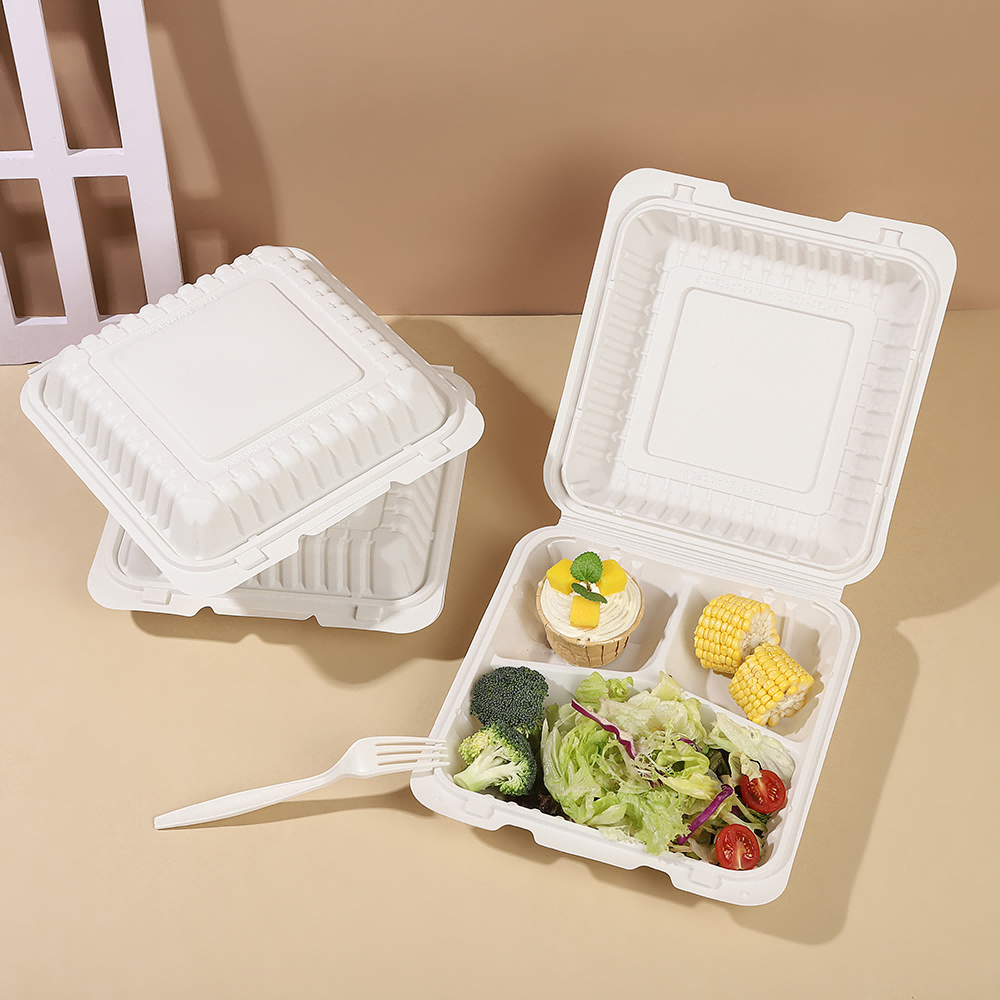
Chain catering operators doing delivery have probably all faced this tricky situation: a store in California was just fined for using non-compostable containers, while a branch in New York received customer complaints about hot soup leaking all over the delivery bag—costs from returned meals alone ate up 3% of profits in just one week. This issue has become even more prominent in 2026. On one hand, global demand for disposable food containers is expected to exceed 68 billion units (source: 2026 Global Packaging Association Forecast); on the other hand, policy requirements vary by region: California’s SB 1053 Act mandates compostable or recyclable containers starting in January, while the EU strictly enforces the EN 13432 biodegradation standard. Finding a disposable food container that can meet regional compliance, prevent leaks, and control costs has become a top priority for many brands. We spent 18 months optimizing our product to create a disposable food container that not only meets compliance requirements worldwide, but also pushes the leak rate down to the new benchmark of 0.3%—without forcing businesses to overspend.
Leakage may seem like a small issue, but it hides troubles throughout the entire supply chain. During a conversation with a chain burger client, they mentioned that traditional containers seem tightly sealed, yet sauce still seeps out when riders brake suddenly. Later, we tested this: ordinary containers have a leak rate of over 15% in simulated deliverybumpy conditions, with even worse leakage for high-fluidity items like noodle soup or salad dressing. To reduce this to 0.3%, a single buckle is far from enough—comprehensive protection is needed. For materials, we use food-grade high-strength PP that won’t deform even when stacked 10 layers high, plus an elastic memory silicone gasket. Unlike ordinary plastic gaskets, this one handles temperature extremes far better: from -20℃ frozen items to 120℃ hot soup, it stays tightly sealed against the container lid, forming the first leak-proof barrier.
We refined the structure further with a "double buckle + circular locking edge" design. Two buckles on the lid edge produce a "click-click" sound when closed, ensuring a secure fit. A circular groove where the lid meets the container body holds the silicone gasket in place—even when riders brake suddenly, generating 35G of centrifugal force, the gasket won’t shift. A chain sushi client previously used compostable containers that leaked sauce, turning rice soggy. After switching to our containers, they only had 1 minor leak in over 300 deliveries, with a leak rate exactly hitting 0.3%.
Compliance is even more critical. California now requires compostability certification, the EU enforces the EN 13432 biodegradation standard, and some Southeast Asian countries demand heat resistance above 100℃. Our disposable food containers come in multiple versions: models for Europe and the US achieve 65% natural biodegradation in 180 days, exceeding the EN 13432’s 60% threshold; models for tropical regions have a 0.2mm thicker PP layer, with heat resistance up to 130℃—perfect for holding freshly cooked curry. We provide corresponding test reports for each version: a fried chicken client needing to enter the UK market received EN 13432 and food contact safety reports within a week, saving them time on third-party testing.
Cost is another key concern for businesses. Many assume compliant containers are expensive, but our modular molds have increased production efficiency of sealed structures by 30%. For bulk orders, the unit price is about 15% lower than ordinary compostable containers. A fast-food client previously used paper containers that leaked soup and required extra plastic bags—after switching to ours, their packaging costs dropped by 8%, and they received fewer eco-complaints about plastic bags.
Below is our latest test data from early 2026, showing clear differences from ordinary containers:
| Indicator | Ordinary Disposable Food Containers | gorlando Disposable Food Containers | Regional Compliance Requirements (Examples) |
|---|---|---|---|
| Simulated Delivery Leak Rate | 15%-20% | 0.3% | California: No mandatory leak rate (but customer complaint threshold ≤1%) |
| 180-Day Natural Biodegradation Rate | ~12% (traditional plastic) | 65% (compliant models) | EU EN 13432: ≥60% |
| Heat Resistance Range | -5~100℃ | -20~130℃ | Southeast Asia: ≥120℃ |
| Bulk Purchase Unit Price (USD) | 0.12-0.15 | 0.11-0.14 (compliant models) | California compostable container average: 0.16-0.20 |
You might wonder if bulk customization is complicated—but it isn’t. A bubble tea client needed small topping containers with their brand logo; we delivered samples in just 6 days, and all customized products undergo pre-compliance testing. After all, no one wants customized containers that fail to meet target market policies.
Here are answers to the most common client questions recently:Q: Can your disposable food containers provide EU EN 13432 and California compostability certifications?A: Absolutely. We pre-certify models for different markets—whether it’s EU EN 13432, US ASTM D6400, or UK PAS 2060, we provide certification documents upon order if requested. A pasta client entering the German market used our EN 13432 report to pass a local supermarket’s entry audit smoothly.
Q: How is the 0.3% leak rate tested? Will it be higher in real use?A: We simulated delivery scenarios in major global cities—frequent braking in New York, bumpy roads in Tokyo, and high temperatures in Bangkok. Containers filled 80% with soup were run on a simulated delivery vibration table for 2 hours to test leakage. Client data supports this too: the chain sushi brand mentioned earlier made 12,000 deliveries in 3 months with only 37 leaks, a rate of 0.31%—nearly matching our test results.
Q: If we order 100,000 containers for the Australian market, how long will delivery take?A: Our modular molds allow quick specification changes. For compliant models for Australia, production of 100,000 units takes about 12 days. Including sea freight, it takes roughly 25 days from order placement to warehouse receipt. A burger client once needed a rush order of 50,000 units during peak season, and we delivered 2 days early—no impact on their store stock.
Choosing disposable food containers in 2026 is no longer just about "being able to hold food"—they must meet regional compliance to avoid fines, prevent leaks during delivery to retain customers, and control costs to protect profits. Our containers are designed to solve these practical problems, whether you serve sushi, fried chicken, or hot noodle soup, and need to adapt to Europe, America, Southeast Asia, or Australia. After all, good packaging should give brands peace of mind and customers a satisfying dining experience.
Disposable Chopsticks: 5 Critical Factors to Check When Sourcing from China
Bamboo Skewers Bulk Buying Guide: Practical Tips to Balance Cost, Quality and Sustainability